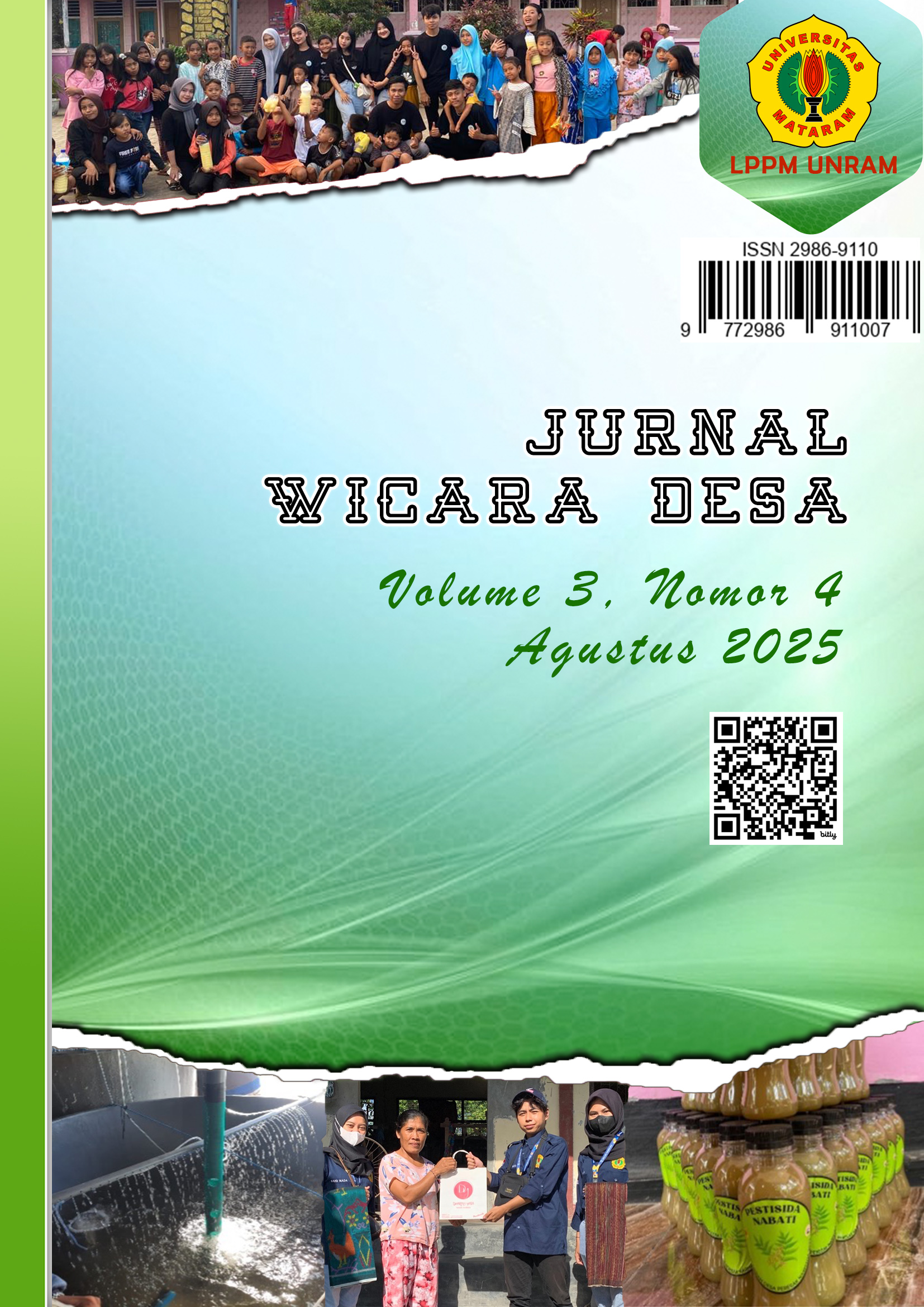
OPTIMALISASI POTENSI LOKAL UNTUK MENDUKUNG PARIWISATA DAN EKONOMI MELALUI PEMBERDAYAAN MASYARAKAT DESA OBEL-OBEL
DOI:
https://doi.org/10.29303/0hf29g45Keywords:
KKN, community empowerment, agrotourism, Obel-Obel VillageAbstract
The Community Service Program (KKN) is one form of student involvement in the implementation of the Tri Dharma Perguruan Tinggi (Three Pillars of Higher Education), particularly community service by KKN groups. The focus of the 2025 KKN PMD Program at Mataram University in Obel-Obel Village, Sambelia District, East Lombok Regency, on the community is on the main program of planting 1,500 tree seedlings in the form of fruit trees and ornamental plants as the foundation or start of agrotourism development for the village. Additional programs designed include healthy exercises as a campaign for healthy living, teaching at elementary schools and TPQs, posyandu counseling, construction of a photo spot bridge, provision of trash bins, and celebration of Indonesia's 80th Independence Day. The purpose of this KKN activity is to provide solutions and address various problems experienced by the village, including in the areas of fisheries, agriculture, underutilization of idle land, education, and health. The results of the activities carried out showed an increase in public awareness of environmental preservation, health, education, and hygiene. Overall, this KKN program succeeded in establishing collaboration between students, village officials, and the community to optimize local potential and support tourism and sustainable economic development.
References
Adnyana, I. B. (2021). Infrastruktur kreatif untuk pengembangan desa wisata. Denpasar: Pustaka Bali.
Aziz, A. (2020). Pendidikan karakter berbasis nilai keagamaan di TPQ. Jurnal Pendidikan Islam, 9(2), 145–156.
Badan Pusat Statistik Kabupaten Lombok Timur. (2015). Lombok Timur dalam Angka 2015. BPS Kabupaten Lombok Timur.
Fitriani, D. (2021). Peran kader posyandu dalam pencegahan stunting. Jurnal Kesehatan Masyarakat, 13(1), 25–34.
Hidayat, A., & Nugroho, P. (2020). Agrowisata sebagai strategi pengembangan desa wisata berkelanjutan. Jurnal Pariwisata Berkelanjutan , 4(1), 45–56.
Hidayat, R. (2022). Pengembangan ekonomi kreatif berbasis sumber daya lokal. Yogyakarta: Deepublish.
Kementerian Desa, Pembangunan Daerah Tertinggal, dan Transmigrasi. (2021). Pedoman Umum KKN Tematik Pemberdayaan Masyarakat Desa. Jakarta: Kemendes PDTT.
Kurniawan, A. (2021). Agrowisata dan pemberdayaan masyarakat desa. Jakarta: Rajawali Pers.
Lestari, N. (2019). Pengaruh bimbingan belajar berbasis partisipasi terhadap motivasi siswa. Jurnal Pendidikan Dasar, 6(2), 77–89.
Nurhayati, S., & Sari, P. (2022). Pola hidup sehat melalui olahraga masyarakat desa. Jurnal Kesehatan Olahraga, 5(1), 10–18.
Prabowo, D. (2020). Nilai gotong royong dalam pembangunan desa. Jurnal Sosial Humaniora, 8(1), 33–44.
Suharto, E. (2013). Pembangunan, Kesejahteraan Sosial dan Pemberdayaan Masyarakat. Bandung: Refika Aditama.
Putri, D., & Nugroho, T. (2019). Pemberdayaan masyarakat melalui produk olahan hasil laut. Jurnal Pengabdian Kepada Masyarakat, 4(2), 115–123.
Suprapto, S., & Rahayu, M. (2020). Peran penghijauan dalam pembangunan desa berkelanjutan. Jurnal Lingkungan dan Pembangunan, 8(1), 45–57.
Widya, N., Romdanih, & Pudjiati, D. (2020). Meningkatkan Keterampilan Membaca Siswa melalui Strategi Membaca dan Berpikir Kritis Secara Langsung. Prosiding Seminar Nasional Pendidikan STKIP Kusuma Negara II, 188–191.