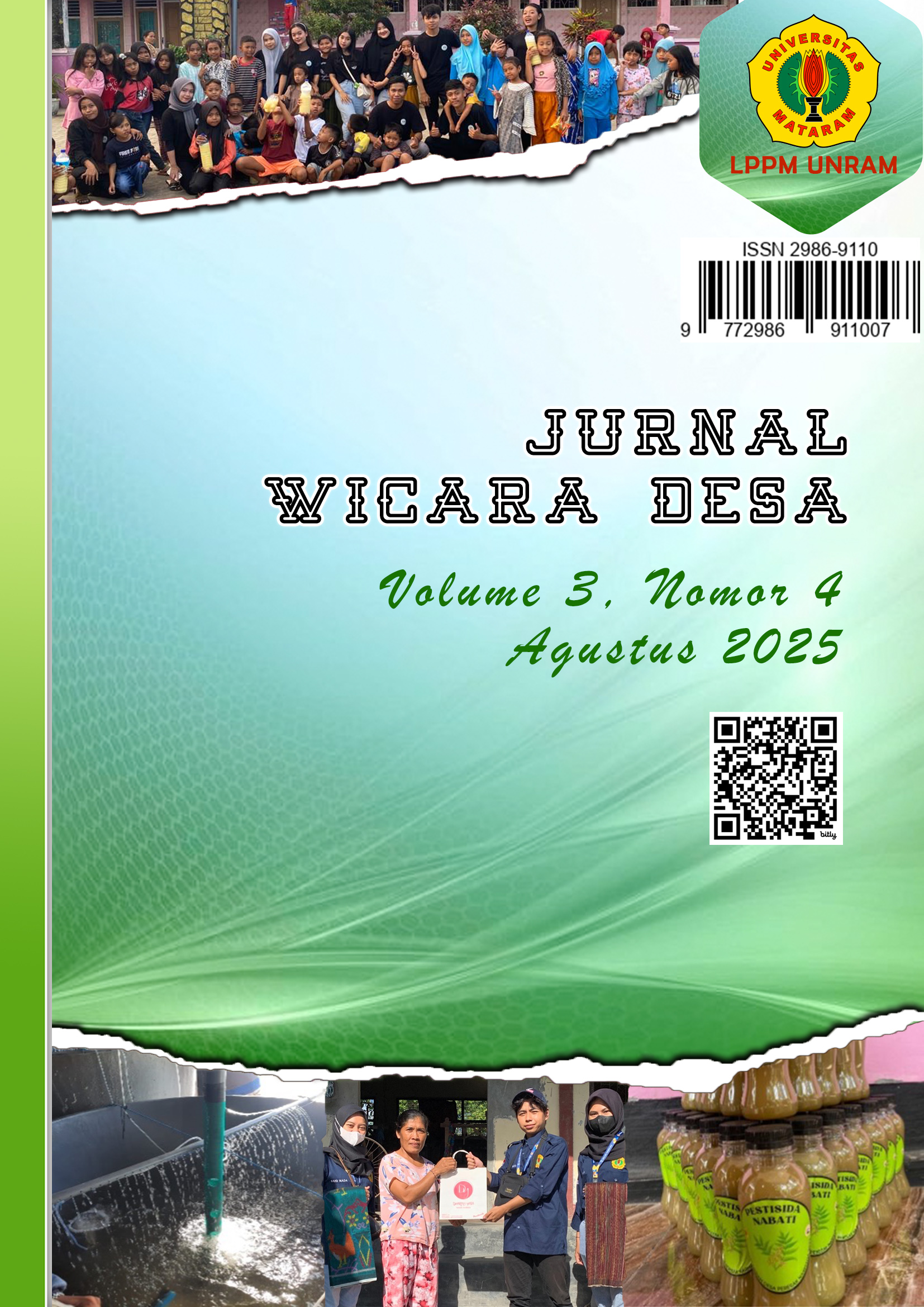
PEMANFAATAN KULIT BAWANG MERAH (ALLIUM CEPA L.) DAN BAWANG PUTIH (ALLIUM SATIVUM L.) SEBAGAI PESTISIDA NABATI UNTUK MENDUKUNG PERTANIAN BERKELANJUTAN
DOI:
https://doi.org/10.29303/wdrfg660Keywords:
botanical pesticide, onion peel, community empowerment, sustainable agricultureAbstract
Farmers’ dependence on synthetic pesticides has caused negative impacts such as environmental pollution, harmful residues, and health risks. As an alternative, botanical pesticides provide an eco-friendly solution that is simple to prepare and safe to use. This article discusses a community empowerment program in Sembalun Tourism Village through training on producing botanical pesticides made from onion (Allium cepa L.) and garlic (Allium sativum L.) peels-household waste with potential bioactive compounds.
The program was conducted in 1 August 2025 through observation, socialization, and demonstration. The process involved grinding onion and garlic peels with water, fermenting for 48 hours, filtering, and applying the extract to local horticultural crops. Field trials showed a reduction in pest eggs and larvae, although effectiveness was still lower compared to synthetic pesticides.
The community response was highly positive, with more than 80% of participants attempting independent preparation of botanical pesticides. Main challenges included short shelf life of the extract and variability in raw material quality. Overall, the program successfully raised environmental awareness, reduced organic waste, and encouraged sustainable agricultural practices.
References
Anwar, R. K., Saepudin, E., & Rukmana, E. N. (2024). Eco-tourism and economic striving of the locals: From participation to empowerment. Journal of Infrastructure, Policy and Development, 8(2), 3038.
Arif, A. (2015) ‘Pengaruh Bahan Kimia Terhadap Penggunaan Pestisida Lingkungan’, Jf Fik Uinam, 3(4), pp. 134–143.
Damanik D., L. (2022). Pestisida Nabati Berbahan Baku Limbah Kulit Bawang Merah (Allium cepa L.) untuk Mengatasi Hama Penting pada Tanaman Asparagus (Asparagus officinalis). Jurnal Pusat Inovasi Masyarat, 4 (2), 151-158
Faturahman R., Yasifa, N. A., Setyani. A., Febrianty. A. (2025). Efektivitas Kombinasi Ekstrak Limbah Kulit Bawang Merah dan Kulit Bawang Putih serta Serai sebagai Pestisida Organik terhadap Serangan Ulat Jerman (Tenebrio molitor) pada Tanaman Selada (Lactuca sativa), 12 (1), 42-53
Hamzah, A., & Tan, A. K. (2023). Sustainable tourism and community-based ecotourism: Principles and practices in rural destinations. Springer Nature.
Isman, M. B. (2017). Bridging the gap: Moving botanical insecticides from the laboratory to the farm. Industrial Crops and Products, 110, 10–14.
Kartini, N. L., & Rini, A. M. (2019). Pemanfaatan pestisida nabati untuk pertanian berkelanjutan. Jurnal Agroteknologi Tropika, 8(1), 1–8.
Kementerian Pertanian RI. (2023). Statistik Pestisida Pertanian Indonesia. Jakarta: Direktorat Jenderal Prasarana dan Sarana Pertanian.
Nurhayati, S., & Ardiansyah, D. (2021). Potensi kulit bawang merah sebagai pestisida nabati. Jurnal HPT Tropika, 21(2), 145–152.
Pimentel, D., et al. (2020). Environmental and economic costs of pesticide use. Journal of Environmental Science and Policy, 42, 56–62.
Rizky, R., Jalaluddin., Ishak., Nurlaila, R., & Lukman Hakim. (2022). Pembuatan Pestisida Nabati Dari Bawang Putih Dengan Penambahan Sabun Cuci Piring. Chemical Engineering Journal Storage, 2(1), 12-22
Sabaruddin. (2021). Aplikasi Pestisida Nabati Bawang putih ( Allium sativum L. ) Untuk Pengendalian hama ulat grayak (Spodoptera litura) pada tanaman cabai (Capsicum annum L). Jurnal Agroekoteknologi, 3 (2), 121-126
Sholihah, N., & Widodo, T. (2020). Aktivitas insektisida ekstrak bawang putih terhadap hama Spodoptera litura. Jurnal Proteksi Tanaman, 8(2), 97–104.
Sofianto, M., Fathurrahman, M., & Kurniawan, A. (2024). Eco-friendly agricultural practices as a driver for rural tourism sustainability. Rural Sustainability, 2(1), 45–58.
Yuantari, M. G. C., & Widianarko, B. (2017). Dampak penggunaan pestisida terhadap kesehatan dan lingkungan. Jurnal Kesehatan Lingkungan Indonesia, 16(1), 10–17.