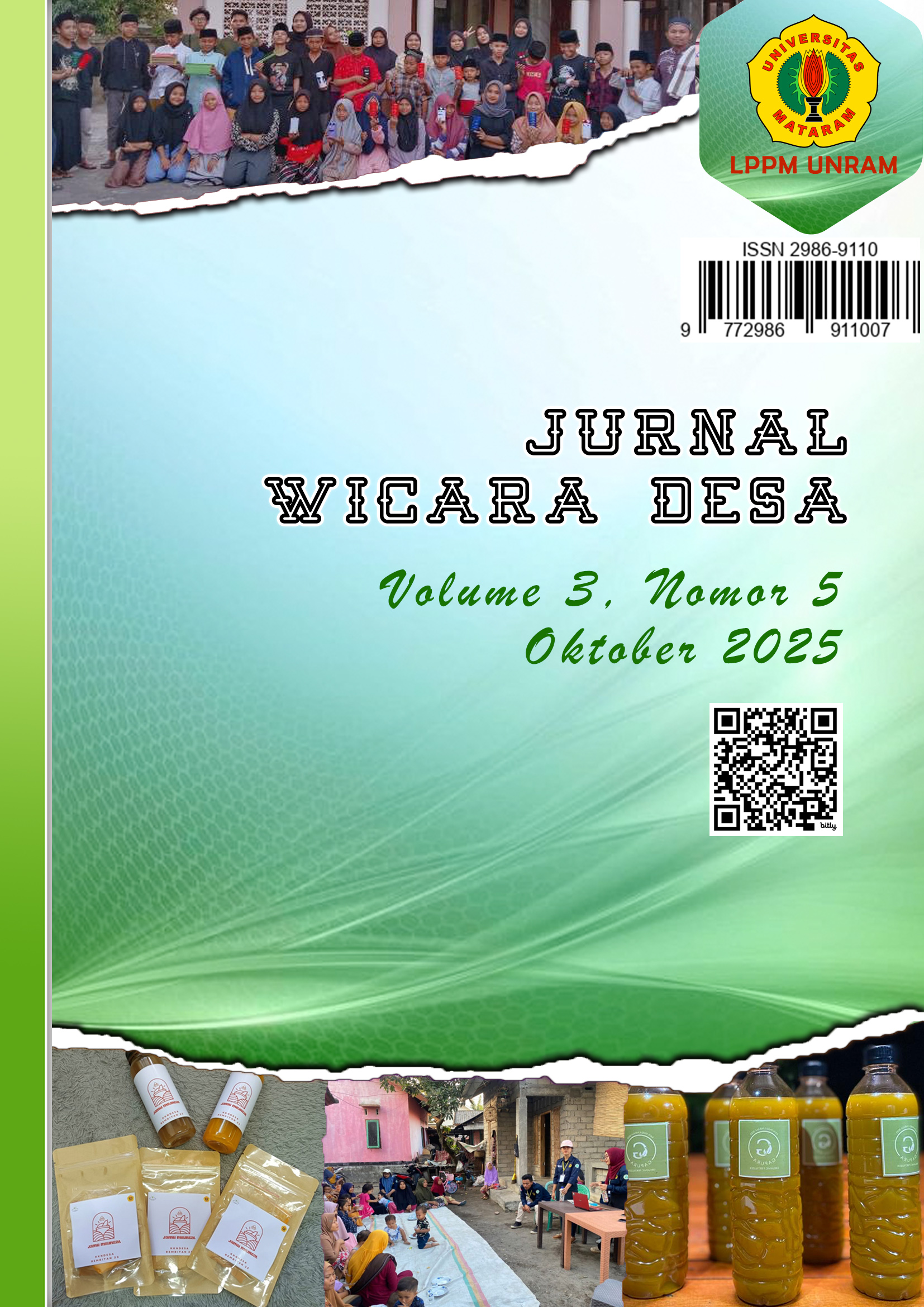
MENGHIDUPKAN KEMBALI SEMANGAT BELAJAR ANAK DESA MELALUI PENGEMBANGAN RUMAH BACA DI DESA DAREK, KECAMATAN PRAYA BARAT DAYA
DOI:
https://doi.org/10.29303/fyqrat38Kata Kunci:
Literasi, Rumah Baca, KKN PMD, Minat Baca, Desa DarekAbstrak
Literasi merupakan kemampuan yang sangat penting dalam pendidikan, berperan dalam membentuk generasi muda yang cerdas, kreatif, dan mampu bersaing di era globalisasi. Di Desa Darek, Kecamatan Praya Barat Daya, Kabupaten Lombok Tengah, minat baca anak-anak masih tergolong rendah. Hal ini disebabkan oleh keterbatasan akses terhadap buku, minimnya fasilitas belajar non-formal, serta kurangnya dukungan dari lingkungan keluarga dan masyarakat sekitar. Untuk menjawab permasalahan tersebut, mahasiswa Kuliah Kerja Nyata (KKN) PMD Universitas Mataram tahun 2025 melaksanakan program pengembangan Rumah Baca yang bertujuan meningkatkan budaya literasi secara partisipatif dan berkelanjutan. Penelitian ini menggunakan pendekatan kualitatif deskriptif dengan metode Participatory Action Research (PAR), melibatkan anak-anak, orang tua, guru, perangkat desa, dan mahasiswa sebagai fasilitator aktif. Data dikumpulkan melalui observasi, wawancara semi-terstruktur, dokumentasi kegiatan, dan studi pustaka, kemudian dianalisis secara deskriptif untuk menilai dampak kegiatan terhadap minat baca, kemampuan literasi, motivasi belajar, kreativitas, serta keterlibatan masyarakat. Kegiatan literasi meliputi pendataan buku, pengajaran literasi di Rumah Baca selama 45 hari, sosialisasi ke enam sekolah dasar di Desa Darek, pembelajaran rutin di SD 1 Darek setiap Senin dan Selasa, serta lomba membaca puisi, membaca cerpen, dan lomba mewarnai sebagai bentuk apresiasi tingkat desa. Selama kegiatan berlangsung, terlihat peningkatan signifikan pada kemampuan membaca dan menulis, berpikir kritis, kreativitas, rasa percaya diri anak-anak, serta partisipasi aktif orang tua, guru, dan masyarakat. Kegiatan ini berhasil membangun ekosistem literasi yang saling mendukung antara Rumah Baca, sekolah, dan rumah, serta memberikan pengalaman belajar yang menyenangkan dan interaktif bagi anak-anak desa.
Referensi
Handayani, R. (2019). Pendampingan rumah baca di desa: Dampak terhadap minat baca anak. Yogyakarta: Pustaka Edukasi.
Lestari, D., & Puspitasari, M. (2020). Peran rumah baca dalam meningkatkan literasi anak desa. Jakarta: Prenadamedia Group.
Most Littered Nation in the World. (2016). Global reading habits report. UNESCO.
Nugroho, A. (2021). Rumah baca berbasis komunitas: Strategi peningkatan literasi dan interaksi sosial. Malang: Universitas Negeri Malang Press.
Putra, F. (2021). Rumah baca sebagai sarana literasi berbasis masyarakat. Bandung: Remaja Rosdakarya.
Ramadhani, H. (2022). Pengembangan kegiatan kreatif di rumah baca untuk anak desa. Surabaya: Airlangga University Press.
Sari, N. (2018). Rumah baca: Membangun budaya literasi anak dan remaja. Jakarta: Gramedia Pustaka Utama.
UNESCO. (2016). Literacy: A fundamental human right. Paris: UNESCO Publishing.
UNESCO. (2020). Indonesia literacy survey report. Paris: UNESCO Publishing.
UNESCO. (2023). Global literacy data 2023. Paris: UNESCO Publishing.
Wulandari, S. (2019). Intervensi literasi berbasis komunitas melalui KKN. Jakarta: Universitas Indonesia Press.